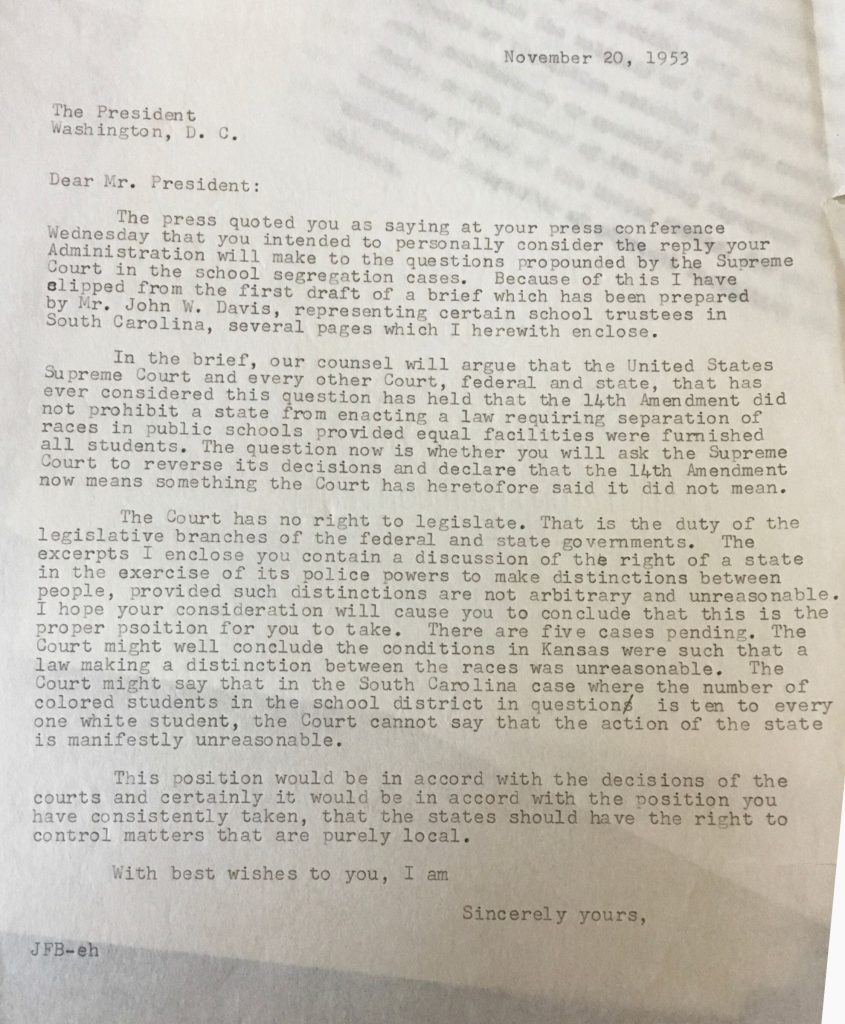
Born in Charleston in 1882, James Byrnes had a long career in public service. After working as a court clerk, he studied law in the office of Judge James Aldrich and was admitted to the bar in 1904.
In 1908, Byrnes was elected circuit court solicitor, and in 1911, he was elected to the U.S. House of Representatives, a position he held for fourteen years. Byrnes was then elected to the U.S. Senate in 1930 and worked closely with President Franklin D. Roosevelt to support New Deal policies. In 1941, Roosevelt appointed him to the United States Supreme Court. He served for sixteen months before resigning to work as director of the Office of Economic Stabilization. Under President Harry S. Truman, he served as Secretary of State from 1945 until 1947, helping to develop U.S. foreign policy following World War II.
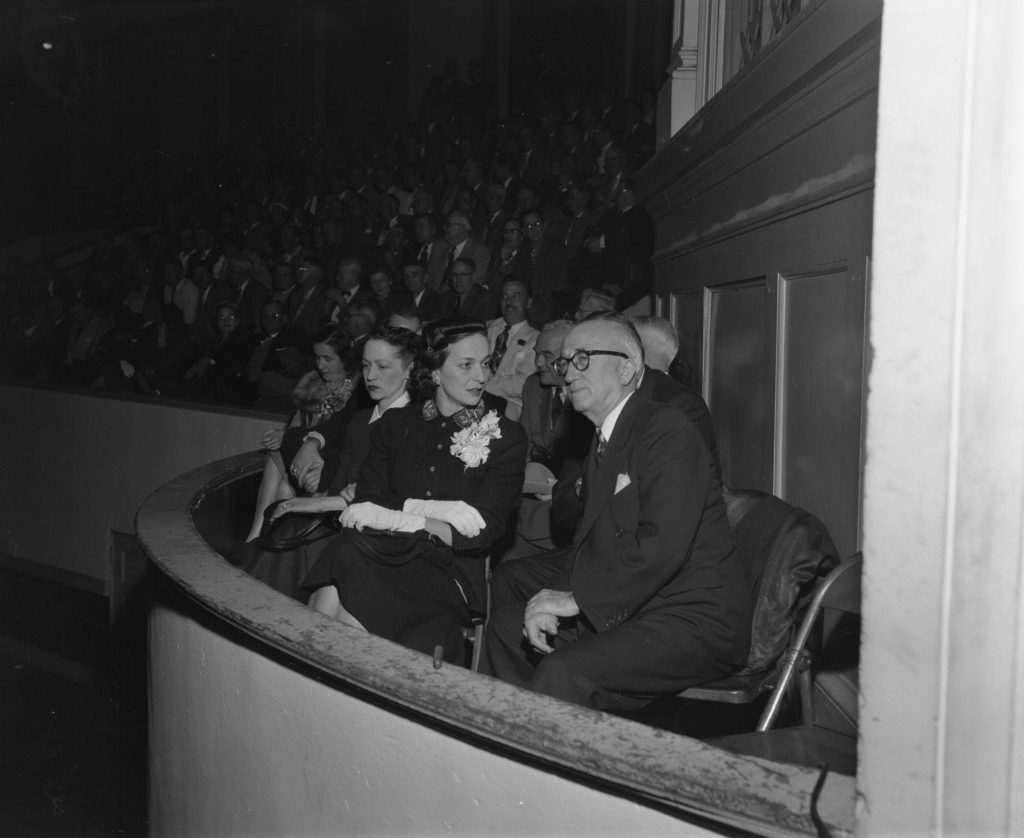
Courtesy of The State Newspaper Photograph Collection, Richland Library
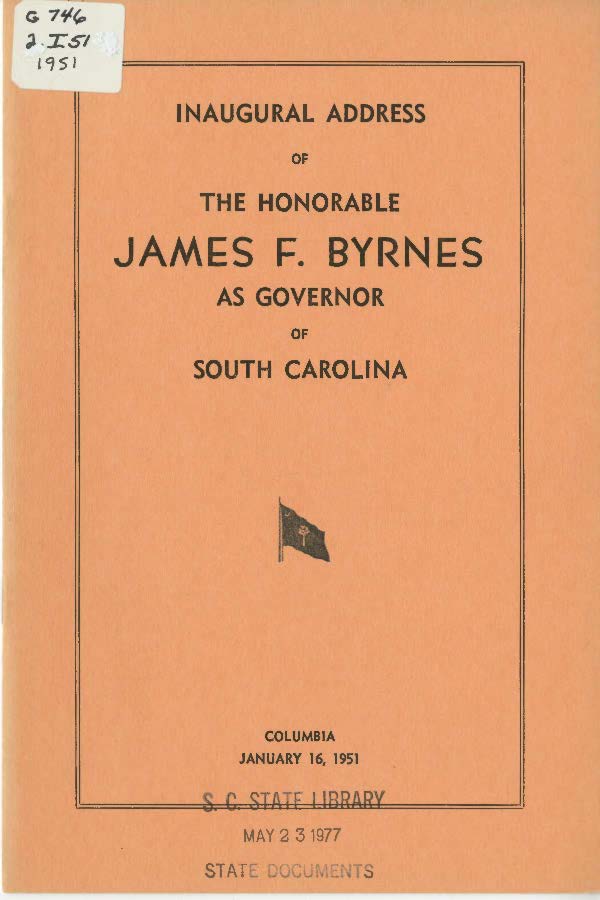
Byrnes, a devout segregationist, was elected governor of South Carolina in 1950 when the Briggs case was underway. Byrnes addressed the situation of the state’s schools in his inaugural address, laying out a plan that would improve education for Black students while protecting school segregation. In 1951, the General Assembly passed his plan, which was funded by implementing the state’s first general sales tax of three cents. Over the next four years, the state provided millions of dollars to local school districts to improve their facilities. A little more than half of this money went to schools for white students. By the end of 1955, the state said it had made schools for Black and white students equal.
By then, Byrnes had left office. He retired from public office in 1954 and passed away in 1972.
James Byrnes and Segregation
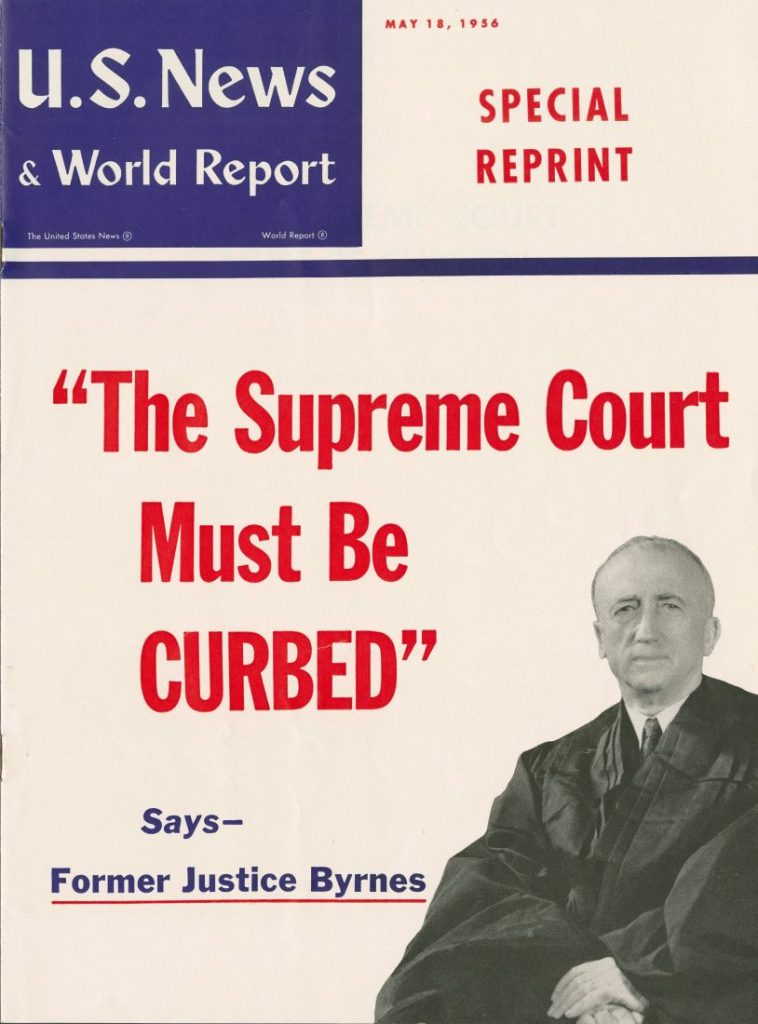
Throughout his political career, Gov. James F. Byrnes was staunchly pro-segregation. In speeches, private correspondence, and publications, he supported segregation and states’ rights to maintain it.