“Segregation is morally and spiritually right and is in the highest
L. B. McCord, in a letter to Frances Ready, October 9, 1957
interest of society.”
Lewis Bryson “L.B.” McCord was born in Abbeville, South Carolina in 1884. He attended Southwestern Presbyterian University and the Theological Seminary in Louisville, Kentucky before returning to South Carolina, where he pastored at churches in Orangeburg and Manning. During the 1930s, McCord was a leader of the Farmers and Taxpayers’ League, which pushed for local control of political issues and lower taxes. This included opposing raising taxes to fund higher pay for teachers.
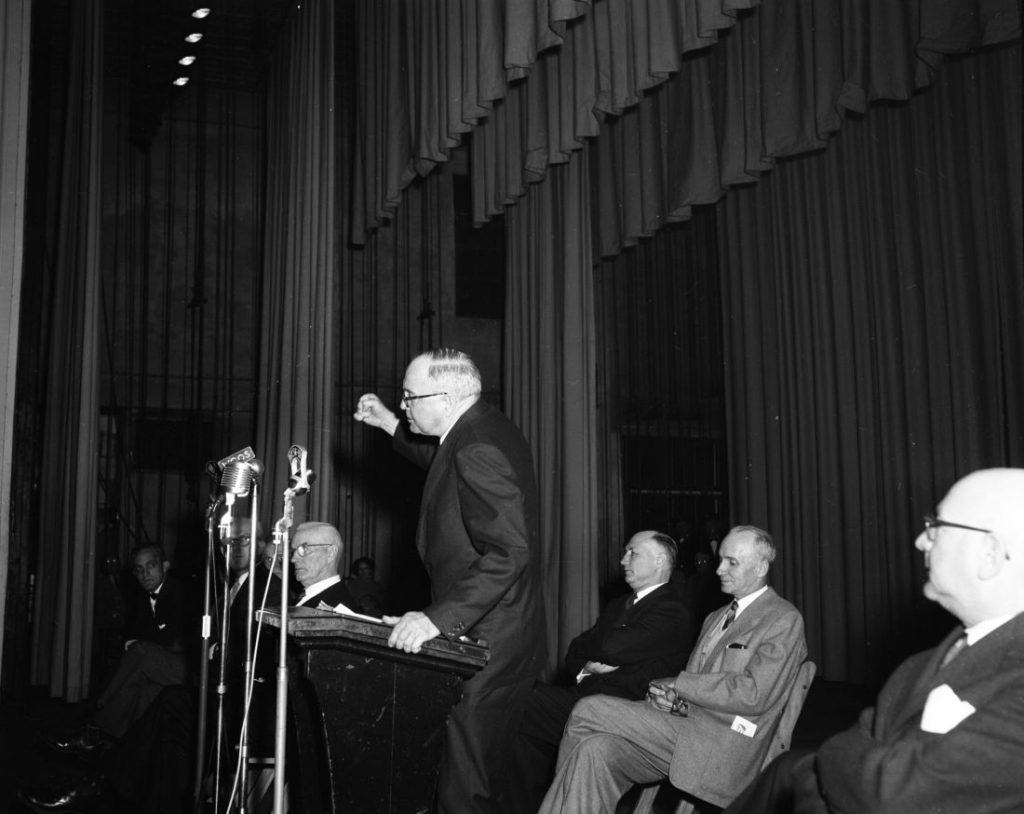
Courtesy of the State Newspaper Photograph Collection, Richland Library
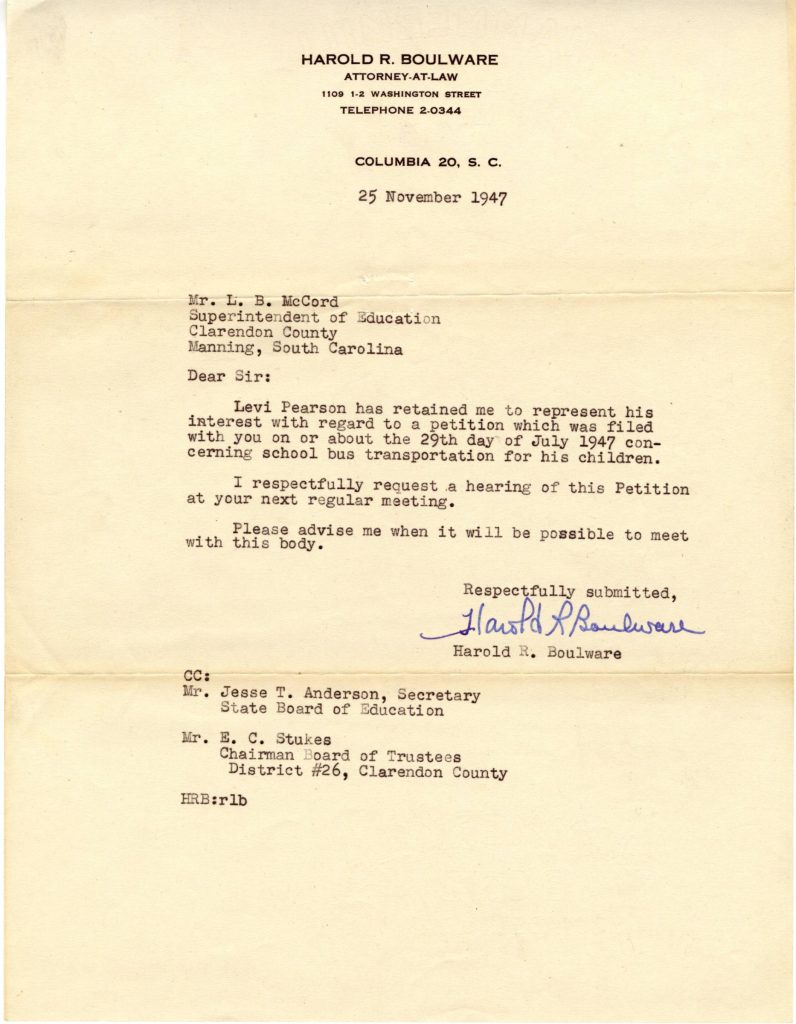
McCord unsuccessfully ran for Superintendent of Education in Clarendon County twice in the 1930s before winning the seat in 1940. In 1947, McCord received and ignored Levi Pearson’s petition for school buses for Black students. As a result, Pearson and the NAACP filed charges in United States District Court against the school system – including McCord. However, the court dismissed the case on a technicality in June 1948.
McCord remained a target for lawsuits for improved educational facilities. The NAACP, working with Joseph A. De Laine and other families in Clarendon County, addressed the petition for equal schools to the chairman of the district board of trustees, R.W. Elliott; the county superintendent of education, L.B. McCord; and other local education leaders. When the petition became a lawsuit, McCord was a named defendant.
When the families of Clarendon County School District 22 filed a new lawsuit asking to end segregation in the county’s schools, McCord was again listed as a defendant. In the federal District Court, he testified that the county spent more money on schools for white students than for African American ones. The U.S. District Court ruled that the Clarendon County school system did not have to integrate its public schools, but that it did have to make its schools equal for all students. McCord oversaw the consolidation of schools and the new building projects.
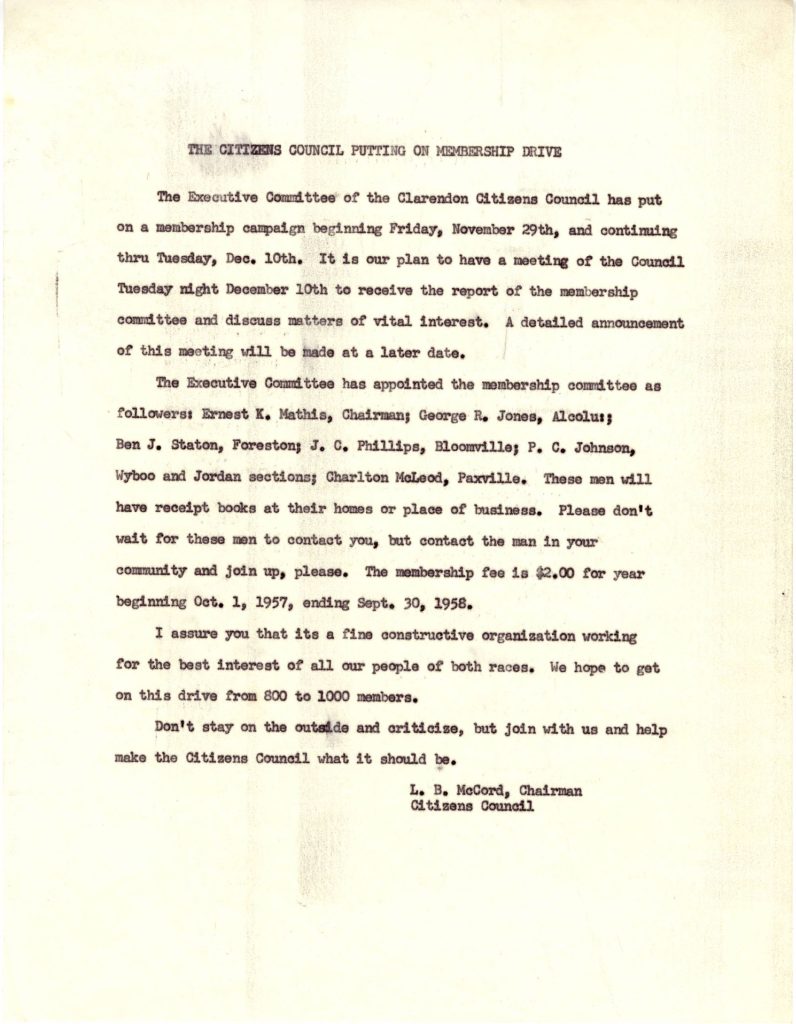
Following the Supreme Court’s ruling in Brown v. Board of Education, McCord called it “one of the worst things that has happened in this century” and led efforts to resist any moves toward desegregation. He threatened to close schools rather than integrate them and became a leader in the local White Citizens’ Council, which worked to maintain segregated schools and white supremacy. In 1959, McCord ignored and denied requests from African American parents to send their children to white schools. In 1961, he became Executive Secretary of South Carolina White Citizens’ Councils and travelled the state speaking about the need to maintain segregation. When segregated public schools became impossible due to federal lawsuits, McCord supported the creation of private schools for white students. McCord remained superintendent until his death in 1970.